
Looking for Mister N: Barolo, Beppe Rinaldi, one year later. Chapter IV
/Summer. Sixteen months later I was back in the Langhe on a beautiful August day, warm but not at all muggy. Around 2 o’clock I decided to stop at Barolo and try my luck. I sat outside a crowded café and I called Rinaldi. Who knows. Maybe he had time to receive me. While I was dialing his number, I looked around. I was the only Italian. Around me there were Americans, Germans, Russians, and Japanese, enjoying the sun and the magical atmosphere. They all looked very happy. They had probably stocked up on expensive bottles of wine, filling the trunk of their cars.
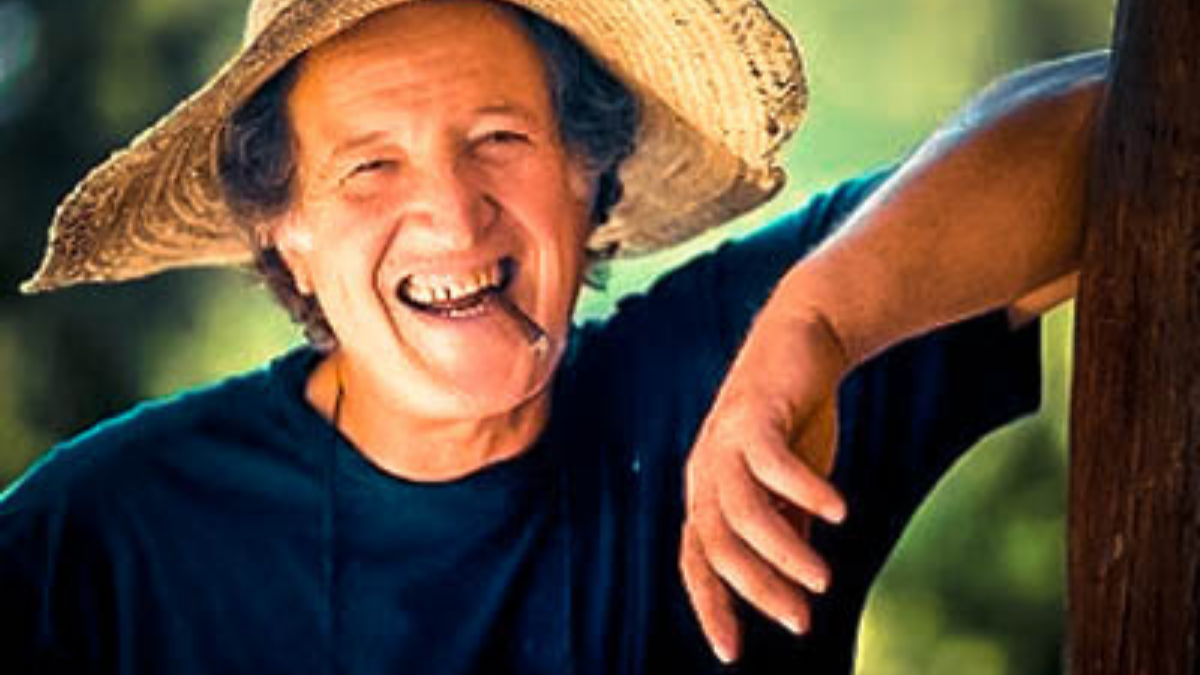
Rinaldi answered the phone and ten minutes later I parked in front of the door of his cellar. The door opened and shortly afterwards he appeared with the usual unlit cigar between his fingers and vaguely sleepy eyes.
“Come in… So? How’s your book going?”.
“Writing is taking longer than expected…”.
Rinaldi remembered perfectly our previous meeting. In the dark, damp and cool cellar he sat on a stool and started to talk about Juliet Colbert and the Marquis Falletti (who, after all, cared little or nothing about wine), about Cavour (who cynically had hindered the paddy fields in Catania, Sicily, to favor Piedmontese agriculture) and about that great smartass of Oudart. He seemed inspired though. His voice was as lazy as a hot summer day…
Second interview with Beppe Rinaldi (August 8th 2016)
We haven't talked about vineyards and soils yet...
My vineyards are located on four different hills, which have different soils and different exposures. Some are more acidic than others. They can have higher or lower proportion of sand. They can be high or low in nutrients, more or less light, more or less draining. That’s why I’ve always been in favor of blending. When you work with a single variety, you vinify the grapes coming from a single vineyard only if you are in Burgundy, otherwise it makes no sense. The Marquis Falletti had already realized that blending wines produced on different hills was useful in order to try a better balance between acidity, tannins and color. That’s why I generally lean towards blending wines from different hills. In some years we produce the Brunate Barolo, which is a single vineyard wine only because we cannot do otherwise. Sometimes a vineyard produces grapes, while the others don’t. You cannot mix what you don’t have.
Therefore, a blended Barolo would be a more complete wine…
I think so. It is really impressive when you think that the Falletti (a family of bankers originally from Asti, mentioned in documents long before the year 1000) came into possession of these hills, of the La Volta Castle, in the mid-13th century and owned the property until 1864. They owned lands stretching from the River Tanaro to Serralunga d’Alba. Nonetheless, they divided the territory into two areas, l’Agenzia di Serralunga and l’Agenzia di Barolo, which produced very different wines. At that time, they had already understood two things. Firstly, that it was necessary to mix them. Secondly, that they had to focus on quality, not on quantity. So much so that, there’s a letter at Palazzo Barolo ordering the farmers not to leave more than twelve buds per Nebbiolo vine, which means that they had to obtain low yields. At the time vines were ungrafted and produced fewer clusters. In Serralunga, Cappellano planted ungrafted vines…
Counting on sandy soil… I know. I have tasted that Barolo. It was 2002, in Alba, during a tasting of six 1996 Barolos…
And did you like it?
Yes, a lot. I don’t know if it was the best, but it caught my attention and seemed to me the best. There were other important producers that day, but I was deeply impressed by the grace when Cappellano described his own wine.
Oh... was he there too? I miss him like crazy, you know… Did you have the chance to know him better?
Unfortunately not. That day, when I approached him, he invited me to visit him, but I never went there. And now I deeply regret it…
He was one of my few closest friends… What did you want to know?
How old are your vines?
They are rather old. All of them. Unfortunately. Well, I didn’t mean unfortunately… And yet...
Yet, what? In what sense?
I mean that I’ll have to replant some vineyards before I go... I’ve never idealized old vines. The land, the soil and the exposure count much more than the age of the vines.
Has the density of vines per hectare changed over time?
No. Here we go again. Density is just another passing fad. In my vineyards there are 3,600-3,700 vines per hectare [1,440-1,480 plants/ac]. Planted on 6.5 hectares [16ac].
What, in your opinion, makes Nebbiolo unique?
The fact is that they have tried to plant it around the world, but it doesn’t give the same results as the Nebbiolo planted here. It gives an anonymous wine that has nothing to do with ours. A sheer luck, if I may say… Even here in the past, you happened to taste such wines, anonymous, I mean, and then to ask yourself: where are they from? Well, the label says they are from here, but… Can’t be so sure.
Is Barolo an elitist wine?
It has to be elitist. I think quality comes from scarcity. I even said that some vines should be removed. It was a provocation, because here, even those lands that used to be covered with hazelnut groves, meadows or pastures, now have increased in value. The financial transaction has been successful. For those who made it of course... Today it’s easy to turn any plot of land into a vineyard, but then you have to see the quality you can get from it… In the past, our elders used to think very carefully before allocating a new piece of land for a vineyard, because they were terrified of landslides. If a vineyard slides down the hill, how can you fix it? With an ox? Now there are bulldozers, trucks, caterpillars. You remove backfill. You move hills. There are some areas, called Fossati or Priassi, where our elders would have never dared to remove a forest and plant a vineyard instead, because it’s very likely that vines will slide down.
But Fantini mentions Fossati as a historic vineyard…
He refers to a small part of it. Do you know what fussò means? It means that there had already been landslides over time. That’s where squite happened... Do you know the chicken poop? Ploff! That’s a squita. Not a hilly front sliding down. Only a part of it. Sometimes in the middle of the vineyard.
Therefore, while in Upper Piedmont terraced vineyards have been incorporated into the woods, here the woods have been replaced by the vineyards…
Yes. But there have never been terraces here in the Langhe. Here the few stones you find are round. You cannot build a wall with them. Therefore, we have never had vineyards enclosed by walls either. The French clos were created because there were convents, where monks tilled the soil and fully enclosed it with dry stone walls. Those walls closed and defined borders, but they were also a form of defense. Sadly, there have never been large monasteries, or abbeys here. That’s where history is cultivated, and written...
What does Barolo represent for you?
I feel a little sick of talking about wine. After all, it’s just wine.
Well, we haven’t just talked about wine…
What does it mean to talk about wine? Since I come from a family which has tried to favor the common good rather than its own interests, I am still fond of this approach. So were few people like Cappellano and Renato Ratti, who left us almost no trace behind. It bothers me to see what’s happening here. Perhaps because it should be precisely this land that gives input to the Italian wine world…
And it doesn’t?
Very little. Here people worship money like God. Let’s say that they prefer the short-term economic gain to a long-term vision... You have a tough row to hoe in writing this book, don’t’ you? Why bother?
Sometimes I wonder that too...
Come, I’ll show you my oak casks... In every village there was a cooper. They used local oak and chestnut. Here we call the barrel fusto. Even the French call it fût. Grand fût is the big oak cask and fût is the barrel. It was a container used both for winemaking and for transport, on average around 500 kilos. It could range from 300 to 600 kilos.
Like a tonneau?
Yes, but it was made of chestnut. The big cask was the privilege for the few. Like those casks at Palazzo Barolo. Those vats, instead, come from Josko’s cellar...[i]
Ah, the famous Ribolla vats…
This is my grandfather’s vat: it’s over a hundred years old, and it was made by a local cooper, with oak and chestnut. My grandfather had it built to ferment our largest vineyard of Nebbiolo. Brunate must be one hectare [2.5ac]. I always let the grapes from Brunate ferment in here. Grapes from different vineyards ferment separately. Each vat contains the grapes from a different vineyard.
In your opinion, how important are the variety, the soil and the hand of man to produce Barolo?
It’s not enough to have a great grape variety and a great terroir if you’re not a great interpreter. With Nebbiolo you have to be an interpreter. Because the fame of some hills, such as Cannubi, would today be ridiculous, or even dubious if some local producers stubbornly hadn’t interpreted the greatness of this land. There has been a very strong land speculation here. I’m talking about low-level speculation, due to a strong desire to produce Barolo at all costs, even when you didn’t have the right raw material because the vintage was critical, or because the vines were planted in unsuitable places. We have never forced either the qualitative or quantitative production of the grapes to make a wine that must be liked at all costs. If a Barolo or a Barbaresco (in the great vintages, I can’t distinguish them) were easier to drink, their nature would be a little distorted. To approach them it is necessary to undertake a path. I’ve never thought of having to “apply rouge” to a Barolo to make it more captivating. Here winemakers have always feared that Barolo had too violent an impact on the oral mucosa. Yet, neither my father nor I ever experienced such fear, even though we did notice that some vintages were difficult to approach. I still prefer a difficult wine.
It seems to me that speculation also concerns the price of Barolo.
Look, maybe my daughters are reluctant to sell wine for 200 euros a bottle just because I’m their father, or maybe because they wouldn’t be able to. Luckily, both Marta and Carlotta have decided to stay and to work here! However, sometimes I think that some wine producers should sell bottles not at 200, but at 1,000 euros in order to play a very important role, like Romanée-Conti in France...
But how much do you sell your Barolo for?
If I wanted, I could afford to double the price by tomorrow, but it is a matter of ethics, it is part of a family policy. From a certain point of view, it is also wrong not to do it, because basically those who buy my wine from me pay 32 euros plus VAT per bottle, then deduct the VAT, and resell it for 270 euros. It’s very difficult for us to have control over our bottles. We don’t know exactly where they go and what happens to them…
Why is this unique land also so fragile?
Since my grandfather was a co-founder of the Consortium of Barolo and Barbaresco in 1934, and my father a co-founder when it was established a second time in 1947, one might think that there’s a collective conscience here. Alas, it’s still missing, although, from a viticultural and oenological point of view, this land has more history than any other in Italy, and although the concept of preservation started from here. Perhaps it started from here because we really felt the need and, at a certain point, four simple men said: enough is enough! Quality and authenticity must be protected! Because here it was full of bunglers. That’s why we were the first to adopt those rules of preservation, suitability, analysis and tasting. It all started with the Chamber of Commerce, not with Valoritalia[ii], which, in fact, has deprived the Chamber of Commerce of its pre-eminent and priority role in the field of improving the quality of wine. From here began the tasting commissions to establish the suitability of wines to become DOC and DOCG, then adopted by the consortia of Brunello di Montalcino and Nobile di Montepulciano. We were the first to establish standards for wine production and to create a “Vineyard Register”. One could therefore conclude that a concept of environmental protection, an idea of safeguarding the landscape and the quality of the wine was also born here in individuals.
And yet, in the last twenty-five years, the vineyard area has almost doubled, going from 1,200 to 2,000 hectares [3,000 to 5,000 acres], and the number of bottles of Barolo produced annually has increased from 6 million to over 14 million.
It’s crazy. I consider it crazy. However, this could only happen because the climate has changed. You know, awareness of the common good and its safeguarding is not just a matter of wine quality or professional integrity, both of which came with the DOCG certification, because the DOC was not enough. I must admit that the DOCG was needed to ensure greater integrity. I’m referring to the ministerial countermarks which allow for the numbering of all the bottles produced. Those paper bands have become a joke, but thank goodness they exist. At least we can count the bottles. At the same time, an area like this should have matured the concept of collective good, promoted by the Consortium of Preservation, which could mean, for example, acting with a very strong team spirit, in defense of Beauty and the Common Good. Unfortunately, this did not happen because the God of Money, or rather, quick enrichment, prevailed. As my cousin Bartolo Mascarello used to say: “area affected by a sudden economic prosperity”. I don’t know if land prices have peaked yet... Two million euros per hectare [800,000€/acre]! Long live the enchanted aura that surrounds Barolo… don’t get me wrong, I approve, because I’m in love with Barolo, like my father was, but this is not a good reason not to use common sense in land management and show some foresight in planning and conservation. For example, we should be the first to stop using pesticides and herbicides.
I wonder if the close correlation between land conservation and planning for the future could depend on an environmentalist approach on the one hand, and on an artisanal approach on the other. What do you think?
The push towards the production of organic wine has helped a little, although I must confess that this term –organic– bothers me… I am neither organic nor biodynamic. In short, I do not want to be pigeonholed. I have an anarchist mindset, I… I just do what my grandfather did. He had neither this nor that. And I try not to do certain things. But maybe I’m inclined to stay artisanal because I have an artisanal mindset. This means that you can afford to stay artisanal up to 10 hectares [25ac]. If you own more land, it becomes impossible. Furthermore, if your wine production exceeds 50,000 bottles, it is obvious that you must favor the commercial aspect and travel the world to sell your wine. But then, you can no longer be a winegrower and a winemaker. You become a nomad. Of course, I speak this way because I had the privilege of being born here, and I was lucky enough to have four generations of winegrowers behind me. I’ve never had to travel the world to sell my wine. Look, I just couldn’t: I can’t speak any foreign language, I hate flying, and big cities annoy me very quickly. But, if you don’t have a grandfather who left you a house like this and you have to build everything yourself, obviously you have to travel the world.
I’m still thinking about that winery at Cannubi…
There are many, you know? It’s not the only one. There’s one in every village. Unfortunately, it won’t be the last either. Even though this is a UNESCO listed world heritage site. What’s the point of being a World Heritage Site? No Burgundy wine producer would ever dream of building such a construction because they know perfectly well that presenting yourself in that way is not a winning strategy. If you visit Burgundy’s most famous wineries, they are so humble, so quiet, so modest in their disarming beauty. Of course, we deserve the government institutions and administrators we have. I am talking of the incompetents who come to the cellars like mine and say: oh, but you didn’t use washable paint here, your dog is walking around, there’s a cobweb... Besides, a certain artisan agriculture annoys many, because today it produces millions of bottles. If they had done certain things in France, they would have beaten them or set fire to their offices… Where did you say you are from?
I didn’t. I’m from Codogno[iii]. I don’t feel Lombard though. I feel more Emilian.
I know where Codogno is. My mother was from Busseto… My mother’s father came from Roncole di Busseto, Giuseppe Verdi’s birthplace. He moved here to attend the Oenological School of Alba…
My grandmother was from Bologna. You too are half Emilian, then…
Correct. I don’t feel langhetto either... I’ll make another digression about the people here. Historically, the Alps have always been a sort of funnel. Here it was not a transit area, except between Piedmont and Liguria. There have never been any trades. There are pros and cons. The Alpine arc isolated the villages and therefore these people have never travelled, they have always been narrow-minded… My grandparents saw the sea for the first time when they went on their honeymoon. Just read Fenoglio. Here the fiefdom ended when Napoleon arrived. What did the fiefdom mean? Narrow-mindedness. It meant keeping the people in ignorance in order to dominate them. And then the House of Savoy. They came from Savoy. A periphery country. What did you expect? End of the aside.
Does Barolo look like the people from here?
In a certain way it does. It is a difficult wine, if one does not barrique it… If one does not try to tame it. It’s a wine with rustic components. It’s austere and very serious. It doesn’t talk to you immediately. To appreciate it, you need to undertake a process of change and follow a long educational path that leads to knowledge… But I don’t know if this is still the case.
What is the future of Barolo?
If we want to compare ourselves to Burgundy, the small wineries are still the backbone of these hills as they have kept up the good name of Barolo. Unfortunately, all the big companies have filed for bankruptcy or messed up a bit. At the end of the 19th century there were companies, such as Calissano, which produced excellent wine, but they went bankrupt anyway. When Fontanafredda[iv] declared bankruptcy, it was traumatic for us too...
Why did big companies go bankrupt?
Bad management. The king’s sons devoted themselves to other activities, while the Cavour family died out. The Falletti family also died out. How sad. Now I deliberately exaggerate my claim: if the last Marquis had conceived a child with a maidservant, this land would have had a different story, I think. Because here the aristocracy has not been replaced by an enlightened bourgeoisie. We have never had an enlightened bourgeoisie here. Unlike France. Not even now. No wonder some French kings were descended from the dukes of Burgundy. There is something more. Earlier I was talking about a sort of “funnel”. Here there’s a special breed of beef cattle, the Piedmontese breed, called Fassona. Their meat is excellent precisely because the Alps have isolated them from other breeds and have prevented their mixing. So, the funnel preserved the Piedmontese breed, but didn’t connect us to the world. As early as the 19th century France was exporting wine to the Russian Empire and shipping champagne to St. Petersburg. But Bordeaux was an English port, right? Consider what the British Empire was. The British owned half the world and had to feed those rich and super-wealthy colonists the best of everything. Fort this reason, ships loaded with barriques departed from the port of Bordeaux. To supply the colonies. And what happened here? Nothing. Perhaps this partly explains why the big companies went bankrupt... Apart from that, Barolo can only be successful, as long as we put the effort in and have a long-term vision. Today it is successful anyway, because it is so good that it compares favorably with the best wines in the world: aged Nebbiolo has a winning flavor.
***
Oh yes. The Heavenly Flavor of Aged Barolo… I looked around trying to guess what time it was. I had no idea. In that cellar it was as though time had stopped. The dim light created a rarefied atmosphere of yesteryear: the dark wooden table, the dusty bottles, the family heirlooms, the baskets, the tubs, the old funnels…
We walked slowly back to the open bottles of wine on the table.
“Tell me… why a book on Nebbiolo?”.
I looked at the open bottles and sighed. Good question. Why? I asked myself that too.
“Would you like some Barolo Chinato?”.
“Yes, please…”.
Rinaldi half smiled and poured me some wine.
“Will you join me?”, I asked while holding my glass in mid-air.
He shook his head, as if the doctor had strictly forbidden it.
“Don’t get me wrong”, he added. “I like the idea of a book on Nebbiolo… as long as it doesn’t become yet another useless book…”.
“It won’t… I promise”.
***
Over the years Rinaldi had remained true to himself with 3,700 vines per hectare [1,480 vines/ac]. Despite his success, he had never increased his wine production. According to him, it was not the single vineyard that gave the wine complexity and balance, but the blend of grapes grown on different soils. This was a new thought for me. Historically, vineyards had never been enclosed as in Burgundy. On the contrary, wine growers had always mixed the grapes precisely to preserve an ancient balance that modernity seemed to have forgotten. The other side of the coin was that, unfortunately, History had never been written on those hills.
However, they had an ace up their sleeve: a vine whose wine could not be replicated elsewhere. Nebbiolo didn’t just fight tooth and nail to defend its land, it also repelled the attacks of impatient tasters, as ethers and esters take a long time to form. What made Barolo an elitist wine and, at the same time, a collective good, was its wild and indomitable nature.
Barolo wine was a bit like Michelangelo’s Last Judgment. It was only there, in the Sistine Chapel of the Langhe, but it was a world heritage site. Was it precisely this contradiction that made it a wine that is so difficult to talk about? Was it its hedonistic nature that made producers feel privileged without merit? Or maybe, on the contrary, it was its ethical nature that redeemed them? Perhaps this was the reason why Rinaldi’s ideal client was the loyal one, a sort of friend, and the price of his wines (in his winery) still affordable. What happened outside was another matter altogether.
Like many producers, Rinaldi was simply doing what his grandpa had always done. Unlike many others, he did not claim that the quality of his wine was all due to Mother Nature: Nebbiolo required an interpreter, who, possibly, remained artisanal –that is, a vigneron.
While there was seemingly no connection in Rinaldi’s words, the blending of the grapes from different vineyards, the artisanal approach and the fame of the Cannubi hill were somehow related issues.
As already mentioned, the new regulations approved by the Barolo Consorzio in 2009 had imposed a single mention on the label, pulverizing in a second an ancient knowledge handed down orally for centuries and only questioned in the 1980s – that of the synergy created by different soils. Only later it had cancelled the various subzones of the Cannubi hill[v] (as it had already happened for La Bussia) making them one big mention.
The first provision had damaged Rinaldi, and all the producers like him who made blended wines. No longer able to write “Brunate-Le Coste”, “Brunate-San Lorenzo” or “Cannubi San Lorenzo-Ravera” on the label, he had to invent a fantasy name, “Barolo Tre Tine” (that is, Barolo Three Vats). On the contrary, the second provision, despite having damaged others, paradoxically could have benefited him, because it allowed him to call his “Cannubi San Lorenzo” just “Cannubi” and to double the price, if he ever decided to give up the blending of the grapes from different vineyards. Rinaldi did not want to make use of this faculty, out of respect for the eleven producers of the authentic “Cannubi Core” (including Maria Teresa, the only daughter and heir of Bartolo Mascarello without whom the fame of the Cannubi hill “would today be ridiculous, or even dubious”). Since one of the largest Barolo companies had appealed to the court to abolish the Cannubi subzones, today many were able to legally write Cannubi (the oldest Barolo cru dating back to 1752) on their label.[vi]
The appearance of some controversial buildings with a big environmental impact on landscape was only the visible sign of what was invisibly happening inside the bottles. Strange that the Achilles heel of such a fortunate area was the absence of genuine land conservation. In Burgundy –Beppe Rinaldi seemed pretty sure– certain wineries would have never been built. And yet, if Piedmont had ever had an illuminated bourgeoisie, would it have saved the big wine companies of the past from bankruptcy? Would it have stimulated a vision of the future over time? Would it have succeeded in generating among people a greater awareness of their own value and a more developed sense of the common good? And could it have prevented the acres of vineyards from doubling and the number of bottles from tripling in the last twenty-five years? Who knows. But you don’t change the course of history by using conditional clauses.
Despite the low level of speculation in progress, however, Rinaldi had not lost hope: Barolo could still be saved. He was still in love with Barolo. In him I could perceive a reverential attitude towards its aura, a desire to care for and preserve such a fragile creature, a sense of responsibility towards future generations, a sort of modesty towards less fortunate producers, and an instinct of defense against increasingly aggressive and unscrupulous marketing. Perhaps that was why he felt sick of talking about wine. He heard all that background noise. He did not want to become part of it. At the very end, Barolo is a wine that sells itself, at a high price, and has no need to be told.
While Rinaldi was talking about prices, I thought that the increase in temperatures might have upset a delicate balance. As long as Barolo had been the elite wine destined for the table of the rich and noble, there had been no problems. Just as it had not been a problem until the 1980s, as long as it remained an elitist and difficult wine, for few connoisseurs. But, for people like him, the balance must have broken in the 1990s, when the scenario had changed along with the climate, and Barolo, rare, elitist, difficult, found itself facing a whole world out there, eager to have it.
How to overcome the historic dissonance between elitism and ethics, between globalization and loyalty to oneself? For example, by not increasing densities and acres, and by selling the few bottles produced to regular customers at a fair price, before they end up in the uncontrollable liquidity of speculation.
After all, the capitalist logic is compatible with small luxury productions and with the conservation of the landscape. Reducing the supply of a luxury good automatically increases its demand. And the increase in demand necessarily increases the price. How to reconcile this scenario with ethics? Creating a paradox: the paradox of the small vigneron who produces little and keeps the price low. Of course, small vignerons have to content themselves with what they have, given that their small production is all sold long before ending up in the bottle. A necessary choice if you really intend to save the world and the good name of Barolo. Assuming, however, that they give up the helicopter or the yacht. A very real possibility, since some of them never go anywhere…
***
I emerged from the dark cellar, dazzled by the blinding light of the August sun, and got into the car. I drove thoughtfully south, until I saw a first patch of land covered in forest on top of a hill, then another one in the valley floor, and finally, in the distance, the green Alta Langa.
[ii] Valoritalia is an Italian private company, authorized by MiPAAF (Ministry of Agricultural, Food and Forestry Policies) for the control and certification of wines with Designation of Origin (DOC and DOCG), Geographical Indication (IGT) and wines with indications of the grape variety and/or vintage. It was established in 2009, in order to contribute to the growth of the wine system and, to guarantee the consumer the quality and origin of the wine through the control of each stage of production, from the vineyard to the bottle.
[iii] A small town in the northern Italian region of Lombardy, southeast of Milan, only 6 miles from the border between Lombardy and Emilia Romagna. It made international news on 21 February 2020 when its hospital announced the first official case of covid-19 in Europe with the emergency hospitalization of 'Patient 1'.
[iv] The Fontanafredda Wine Estate was purchased in 1858 by the King of Italy, Vittorio Emanuele II, as a gift for his favourite mistress, Rosa Vercellana.
[v] In 1895, among the historic vineyards in the Municipality of Barolo, Fantini mentioned Cannubbio-Lecoste, Ravera, Moscatello, San Lorenzo, Cannubbio Ferreri, Cannubbio Boschis, Cannubbio Parrocchiale and Brunata.
[vi] In the past the winery “Marchesi di Barolo” company has lost vineyards in the central Cannubi, or Core. Since they were in possession of vineyards in Cannubi Muscatel, due to commercial needs, they appealed to the court to cancel the name “Muscatel” and write on the labels only “Cannubi”. They finally won the case in 2012. For more information, see the interview with Marta Rinaldi (pp. 433-34) and Maria Teresa Mascarello (pp. 481-86) in P. STARA, Il discorso del vino. Milan: Zero in condotta, 2013.